
By Whitney Novellino. Medically reviewed by Stephanie Nguyen, WHNP, IBCLC. Last reviewed October 2026.
You worked hard for every ounce in that freezer. Breastmilk is packed with antibodies and nutrients, and thawing it the right way keeps as much of that goodness as possible and keeps your baby safe.
Quick reference
| Situation | How long it is good for |
|---|---|
| Thawed in the refrigerator | Use within 24 hours, counted from when it is completely thawed |
| Thawed milk at room temperature, or warmed | Use within 2 hours |
| Baby started the bottle | Finish within 2 hours of the start of the feed, then discard |
| Thawed milk back in the freezer | Never refreeze |
3 safe ways to thaw
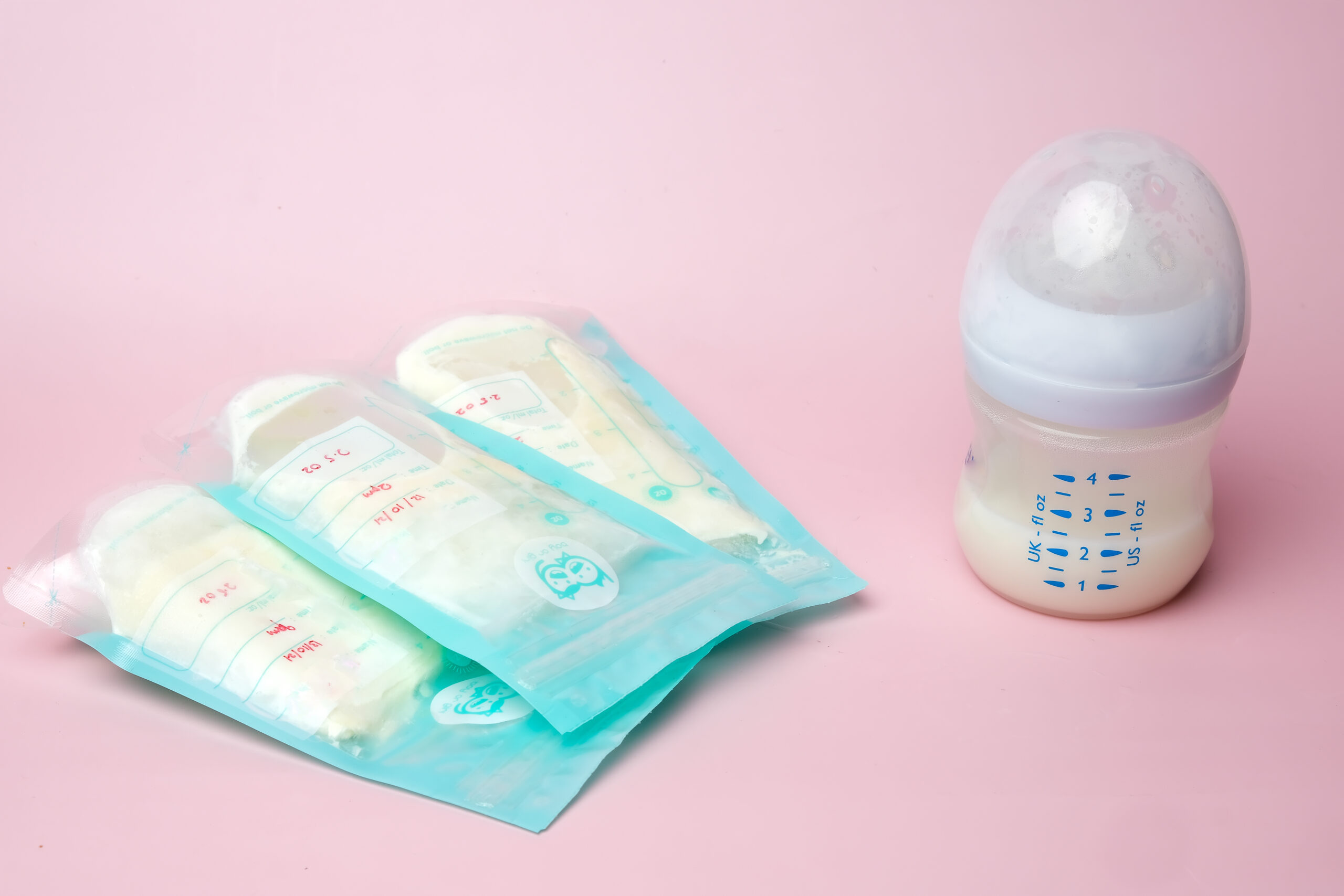
- In the refrigerator overnight. This is the gentlest method. Move the oldest bag or bottle from the freezer to the fridge the night before. It usually takes about 12 hours.
- In a bowl of warm water. Keep the container sealed and set it in warm or lukewarm water. Swap the water as it cools. Most bags thaw in 10 to 20 minutes.
- Under lukewarm running water. Hold the sealed container under the tap, starting cool and slowly warming.
A bottle warmer with a frozen-milk setting also works. Follow the directions so the milk does not overheat.
What never to do
- Never microwave breastmilk. Microwaves heat unevenly, create hot spots that can burn your baby’s mouth, and destroy nutrients.
- Never heat it on the stove or in boiling water.
- Never refreeze milk once it has thawed.
- Do not thaw on the counter for hours.
Warming and serving
Breastmilk does not have to be warm. Many babies happily drink it cold or at room temperature. If your baby prefers it warm, set the sealed container in warm water for a few minutes, then test a few drops on your wrist. It should feel warm, not hot.
Thawed milk separates into a cream layer and a thinner layer. This is normal. Gently swirl to mix it back together.
Troubleshooting
It smells soapy or metallic. This is usually a harmless change in the fat, often called high lipase milk, and it is safe. Read our guide to soapy or metallic tasting breastmilk for what to do.
It looks blue, yellow or has layers. Color varies with your diet and the time of day you pumped. Layers are just the fat rising.
It smells truly sour or you are not sure how long it sat out. When in doubt, throw it out.
Tips to waste less
- Freeze in small portions of 2 to 4 ounces so you thaw only what you need
- Label every bag with the date, and add your baby’s name for daycare
- Freeze bags flat, then store them upright like files, oldest in front
- Use the oldest milk first
- Store milk in the back of the freezer, not the door
- Leave about an inch of space at the top of the container, since milk expands as it freezes
Storage times at a glance
Freshly pumped milk keeps up to 4 hours at room temperature (77°F or cooler), up to 4 days in the refrigerator, and about 6 months in the freezer. Up to 12 months in the freezer is acceptable.
Frequently asked questions
How long is thawed breastmilk good for? 24 hours in the refrigerator once fully thawed, or 2 hours at room temperature.
Can I refreeze thawed breastmilk? No.
Can I mix thawed milk with fresh milk? Yes. Cool the fresh milk in the fridge first, and use the mix within the time limit of the thawed milk.
Can I save what is left in the bottle? Use it within 2 hours of when your baby started feeding, then discard it.
Can I thaw milk at room temperature? It is safer to use the fridge or warm water. If milk does thaw on the counter, use it within 2 hours.
Does frozen milk lose nutrients? A small amount, but it is still far more than enough to nourish and protect your baby.
More support from Modern Milk
Heading back to work and building a stash? Our IBCLCs can help you plan pumping, storage and bottle feeding. Book a lactation consult.
Mama’s Milk Mastery, our online course, covers pumping and milk storage from start to finish. Check out Mama’s Milk Mastery.
Find milk storage bags, bottles and warmers in our Scottsdale shop and online. Shop pumping and storage.
Sources
- CDC: Breast Milk Storage and Preparation (reviewed March 25, 2026)
- Academy of Breastfeeding Medicine clinical protocols, Protocol #8: Human Milk Storage
This article is for education and does not replace care from your own provider.